


Protecting Hardwood Floors
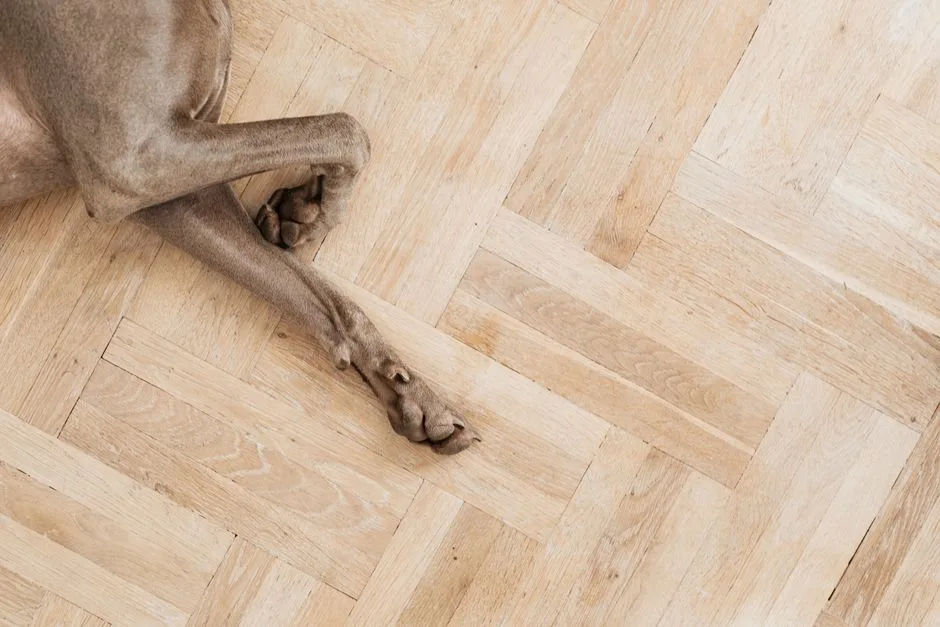
Hardwood floors are the surface pet owners worry about most — and with reason. Dog nails scratch hardwood, accidents can warp and stain it, and the damage is visible and expensive to repair. The good news is that all three risks are manageable with consistent habits.
Keep nails trimmed. This is the single most effective floor protection measure for dogs. A dog with properly trimmed nails causes dramatically less scratch damage than one with long nails. Nails should be trimmed every 3–4 weeks for most dogs. If your dog hates nail trimming, a professional groomer or vet tech can handle it — this cost is far less than hardwood floor refinishing.
Area rugs in high-traffic dog areas. Cover hallways, living room areas where your dog runs, and any spot your dog frequently turns sharply. Felt-backed area rugs won't scratch hardwood when slid. Use a non-slip rug pad to keep them from bunching. Your rugs take the scratch and slip wear; the hardwood beneath stays protected.
Furniture leg pads on everything. Soft felt or rubber pads on all furniture legs prevent the single most common source of hardwood scratches: furniture movement. These are cheap (under $15 for a full set) and take five minutes to install.
Immediate cleanup of accidents. Water and urine on hardwood must be cleaned within minutes — not hours. Standing liquid warps wood and penetrates the finish. Keep paper towels and enzyme cleaner accessible in every room where your dog spends time.
Protecting Rental Carpet
Carpet is the most vulnerable rental surface for pet owners — it absorbs stains and odors in ways that are difficult to fully remediate. But most carpet damage is preventable with a few habits.
Washable area rugs over rental carpet. Layer your own rugs over the rental carpet in the areas where your pet spends the most time. Your rug absorbs the traffic, vomit stains, and claw pulls; the rental carpet stays cleaner beneath it. Choose washable, low-pile rugs that are easy to clean.
Enzyme cleaner for every accident, immediately. Don't let accidents sit. The longer urine contacts carpet fibers, the deeper the uric acid crystals penetrate — through the carpet fiber, into the backing, and into the pad beneath. A fresh accident treated immediately is a non-event; a stain left for hours or days may require pad replacement.
Protect carpet edges and corners. These are the most common scratch and pull locations. Sisal pads at these spots for cats, and furniture or rugs blocking access for dogs, keep these vulnerable areas from becoming fraying entry points.
Protecting Walls and Doors
Walls and doors suffer damage from scratching (cats and dogs), pawing (dogs at doors during separation anxiety), rubbing (dogs leaving oils and debris on lower walls), and the rare but real problem of corner damage from larger dogs who turn fast in tight hallways.
Transparent door scratch protectors. Acrylic or hard-plastic panels that mount on doors with removable adhesive protect against scratching and pawing at the door surface. These are widely available for both standard and French doors, come in clear finishes that are nearly invisible, and remove without damage. Essential for any door your dog scratches when you leave.
Clear chair rail protectors for walls. The lower 18–24 inches of walls in dog households take significant wear from rubbing, oily contact, and occasional scratching. Transparent plastic chair rail protectors mounted with removable adhesive protect this zone. These are particularly useful in hallways where dogs naturally brush past walls.
Baseboard protection. For dogs that chew baseboards (usually puppies or under-stimulated adults), bitter apple spray on the baseboard is the first deterrent. Transparent baseboard guards provide physical protection for persistent cases. These mount without drilling and remove cleanly.
Door frame sisal for cats. Door frames and corners are common cat scratching targets. Sisal rope wrapped around the lower portion of a freestanding post placed at the target is the redirection solution; transparent plastic corner guards applied to the door frame itself are the protection solution. Use both.
When Damage Has Already Happened
Address existing damage proactively. For hardwood floor scratches: wood touch-up markers and scratch-fill products in matching colors reduce visibility significantly — these are available at hardware stores for $5–20 and can make moderate scratches nearly invisible. For carpet fraying: carpet repair kits address edges and corners before the fraying worsens. For wall scuffs and marks: magic erasers work well on painted walls for most pet contact marks without damaging the paint finish. For door scratches: wood touch-up products also work on door surfaces.
If damage is significant, consider disclosing to your landlord proactively. A tenant who says "my dog scratched the door frame — I wanted to let you know and offer to repair it" maintains the trust relationship and often gets a much better move-out outcome than one who lets the landlord discover damage unexpectedly. See our landlord relationship guide for why this transparency matters.
Before your pet ever touches a surface, photograph every scratch, stain, and imperfection in floors and walls at move-in. This documentation proves the damage existed before you arrived — preventing you from being charged for conditions that weren't caused by your pet. See our complete move-in documentation guide.