

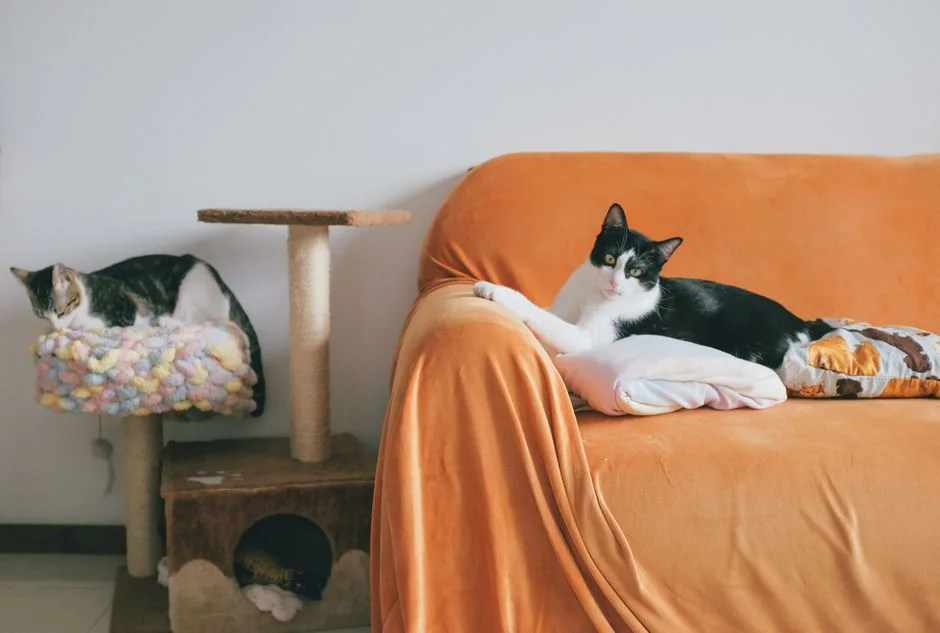
The Scratching Problem — Solved With Redirection
Scratching is the most common cat-related damage concern for rental tenants. Cats scratch to stretch their muscles, maintain their claws, and mark territory — it's not optional behavior that training can eliminate. The solution is redirection: give your cat better, more attractive places to scratch than your walls, doors, and carpet.
1. Sisal posts at scratch-target locations. Place posts or horizontal corrugated pads at the exact spots your cat already wants to scratch. A post across the room is far less useful than one right next to the door frame they've been eyeing. Two to three posts in their favorite rooms covers most situations.
2. Sticky Paws strips on existing targets. These double-sided tape strips stick to walls, carpet edges, and furniture — cats strongly dislike sticky surfaces. They're designed to be removable without surface damage when used as directed. Combine with a nearby acceptable scratching alternative.
3. Carpet corner protection. Carpet edge and corner scratching is extremely common. A horizontal sisal pad placed at the corner covers the target and gives a better alternative in the same spot. For corners already showing fraying, a carpet repair kit addresses this before it worsens into a deposit claim.
4. Clear plastic door frame guards. Removable-adhesive corner protectors protect the most commonly scratched door frames and baseboards. Pair with a vertical sisal post nearby for full redirection.
Renter-Safe Vertical Space Solutions
Cats want height. Most cat furniture solutions for renters emphasize freestanding options that provide vertical space without wall attachment.
5. Floor-to-ceiling tension cat trees. These press against the ceiling with an adjustable tension pole — no mounting, no holes. They're stable, portable, and often include built-in sisal scratching surfaces.
6. Freestanding modular shelves. KALLAX-style shelving units topped with plush pads create multi-level climbing structures without any wall attachment. Weighted and freestanding = fully deposit-safe.
7. Command strip shelves for light perches. For shelves under 15 lbs total weight, appropriately-rated Command strips can support lightweight cat perches and typically don't damage drywall when removed per the instructions.
8. Suction cup window perches. Suction-cup perches mount to the window glass (not the wall), giving your cat a bird-watching post with zero surface damage. Remove and reinstall easily at move-out.
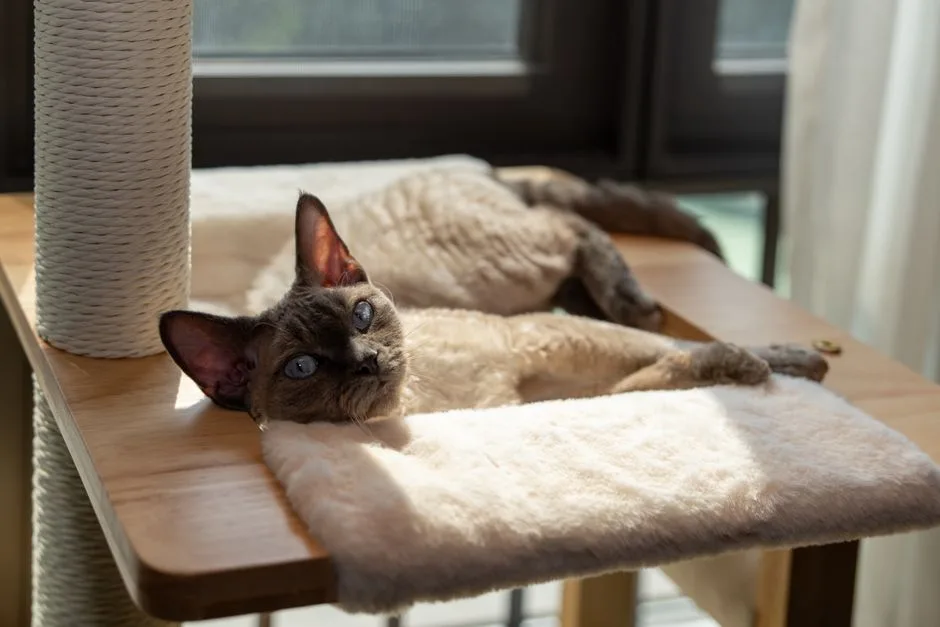
Window Safety Without Permanent Modification
9. Window guard inserts. Metal or plastic grille inserts pressure-fit into the window frame — no drilling. Essential for any window above ground level that you open. Never rely on an insect screen to stop a cat; they aren't designed to hold weight.
10. Keep windows closed or cracked only. If guards aren't available for your window type, keep windows fully closed or cracked too narrow for your cat to squeeze through.
Litter and Odor Management
11. Covered litter box with carbon filter. Enclosed boxes significantly reduce airborne odor. Replace activated charcoal filters monthly.
12. HEPA + activated carbon air purifier. Place a dedicated purifier near the litter area. This combination handles airborne particles and odors that the box cover alone doesn't fully contain.
13. Daily scooping without exception. In a small apartment, scoop daily at minimum — twice daily is better. Odor accumulates rapidly in confined spaces.
14. Enzyme cleaner for all accidents. Use Nature's Miracle, Rocco & Roxie, or similar enzyme cleaner — not soap and water. Enzyme cleaners break down odor compounds rather than masking them. Cats re-mark locations where they can still smell previous accidents even if you can't.
15. Waterproof mat under food and water bowls. Silicone feeding mats catch splashes and food debris that would otherwise stain or warp flooring. Cheap, washable, and one of the easiest preventive steps available.
Floor and Surface Protection
16. Area rugs over rental carpeting. Your rugs absorb claw pulls, vomit stains, and litter tracking instead of the rental's existing carpet. Low-pile, easy-to-clean rugs work best.
17. Furniture leg pads. Felt or soft pads on furniture legs prevent scratching hardwood floors when furniture is moved. Inexpensive and available for most leg sizes.
18. Couch covers or throws. Washable covers on your furniture reduce claw damage and fur accumulation on upholstery you own, and provide a protective barrier above any rental upholstery in furnished apartments.
Balcony Safety
19. Freestanding mesh catio enclosure. Purpose-built balcony catio enclosures use tension or freestanding mounting — no attachment to the building required. Fully removable at move-out.
20. Zip-tie mesh between railings. Heavy-duty plastic mesh zip-tied between balusters prevents cats squeezing through gaps in railings. Zip ties leave no damage and cut off cleanly at move-out.
Photograph your cat-proofing setup at move-in — especially protective strips, corner guards, and removable mounts. At move-out, removing these items and showing the undamaged surfaces beneath gives you strong protection against any damage claims.